Thank you
@bennor! I was having an issue before it was more clear. I installed YazFi and enabled it, but after applying the settings, I kept getting back to default (nothing applied) so I wanted to make sure.
Are you using the GUI interface or SSH?
If you use SSH to access the router and run YazFi to manually edit the settings using SSH does the same thing happen?
In regards to the guest network sample, I probably wasn't as clear. I meant a IoT setup sample. I'm trying to do one and just wanted to know the general layout.
The IoT devices you have may affect which settings you want to enable or disable in YazFi. For example if one puts Amazon Echo type devices on YazFi and want to create a Multi Room Speaker group with Amazon Echo's one typically has to disable Client Isolation.
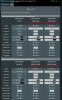
Attached is an example of my current YazFi setup. I have a number of IoT devices using the Guest networks. Including smart plugs, smart LED bulbs, Amazon Echo's, cheap wifi security cameras. Everything works just fine with no issues. I even have these Guest WiFi IoT devices using Pi-Hole servers which are on the main local network for DNS.
As well as the DHCP assignment. Within the settings, do connected devices get a new IP within the set DHCP range? I didn't so im asking/wondering. As well as pinging the DJCP, even set as isolation flat, i am able to, is that supposed to happen?
The guest WiFi devices will obtain an IP address from what ever guest WiFi network they are attached to. When using YazFi, you generally must use different IP address subnets, example 192.168.2.x, 192.168.3.x, etc. for the YazFi guest networks. One cannot use the IP address range from the main LAN. With respect to being able to ping the router for DHCP, note what is stated for guest to router access in the very first post of the thread: "Restrict guests to only contact router for ICMP, DHCP, DNS, NTP and NetBIOS".
Generally the Guest network has to contact the router for certain services like; obtaining a DHCP address, for DNS if the router is set to provide it's own IP address as a DNS server, for the network time protocol (NTP), and for some other services including NetBIOS and ICMP. That is why you can possibly ping the router or network DHCP server.



 even I haven't had the time to try to investigate it...now that we're fully back to work, everything went to second stage...


