Hi everyone,
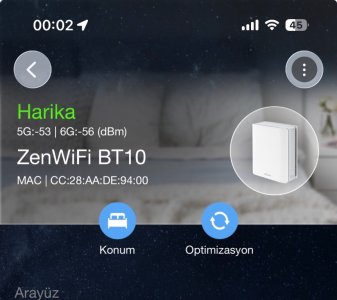
I’m running a dual-node ASUS ZenWiFi BT10 AiMesh system with Ethernet (wired) backhaul.
By default the firmware ships with:
My main question is: with Wi-Fi Agile Multiband disabled, does the system still advertise / use any roaming assistance standards like 802.11k / 802.11v / 802.11r (FT), or are those only enabled when Agile Multiband is ON?
More specifically:
Any insight (especially from packet captures / ASUSWRT behavior) would be appreciated. Thanks!
I’m running a dual-node ASUS ZenWiFi BT10 AiMesh system with Ethernet (wired) backhaul.
By default the firmware ships with:
- Smart Connect: ON (single SSID across 2.4/5/6 GHz)
- Roaming Assistant: ON (RSSI-based disconnect threshold)
- Wi-Fi Agile Multiband: OFF
- MLO: ON, but Fronthaul MLO: OFF (client-facing MLO disabled)
My main question is: with Wi-Fi Agile Multiband disabled, does the system still advertise / use any roaming assistance standards like 802.11k / 802.11v / 802.11r (FT), or are those only enabled when Agile Multiband is ON?
More specifically:
- Do the AP beacons/probe responses still include Neighbor Report (11k), BSS Transition (11v), and/or Fast Transition (11r) capabilities when Agile MB is OFF?
- Or is roaming handled purely by client-side logic + ASUS features (Smart Connect band steering + Roaming Assistant “kick”) unless Agile MB is enabled?
- Since MLO is enabled but Fronthaul MLO is currently OFF, would enabling Fronthaul MLO typically improve performance/roaming for MLO-capable clients, or could it introduce stability/compatibility issues in an AiMesh setup (even with wired backhaul)?
Any insight (especially from packet captures / ASUSWRT behavior) would be appreciated. Thanks!